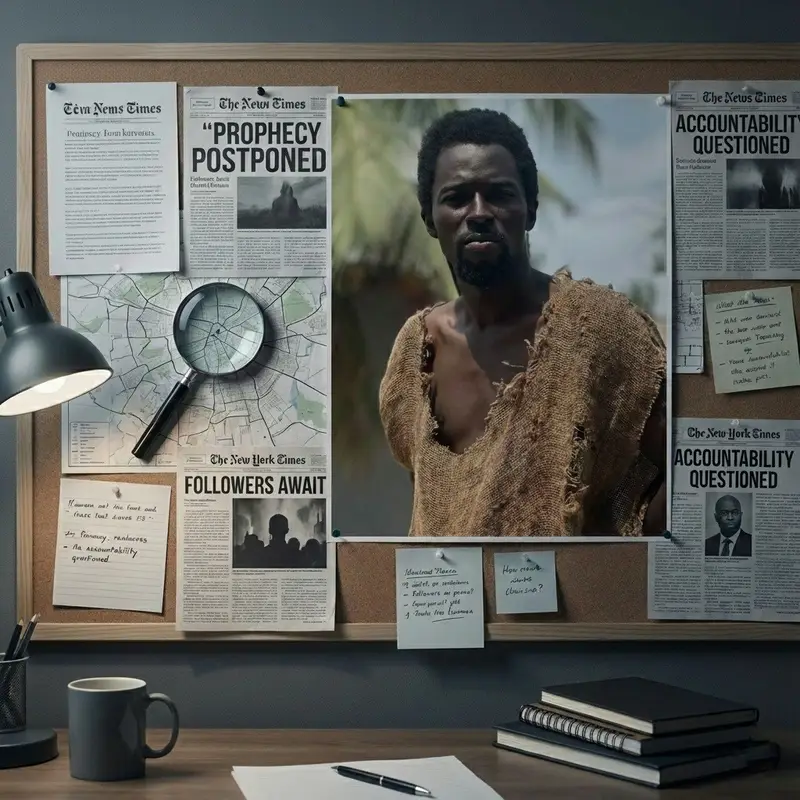

On December 25, 2025, the world did not end in a global flood as predicted by a Ghanaian self-proclaimed prophet known as Ebo Noah (also referred to as Ebo Jesus or Eboh Noah). In the hours surrounding the date, the individual announced that the prophesied catastrophe had been postponed, attributing the delay to divine mercy granting additional time.
This case provides an evidence-based window into the construction, dissemination, and adjustment of definitive prophetic claims in the digital era. Drawing exclusively from documented public video statements and viral content attributed directly to the individual—primarily shared on Instagram (@ebo_noah) and reposted across platforms—this investigation establishes a timeline, examines rhetorical elements, and contextualizes the episode within established patterns of prophetic authority.
Primary Sources Reviewed
-
Video statements posted to Instagram account @ebo_noah, showing ark construction and initial prophecy announcements (circulated from mid-2025 onward).
-
Direct video clip of postponement announcement, stating “God has given us time” and instructions to expand ark preparations (shared December 24–25, 2025).
-
Authenticated public videos depicting the individual in sackcloth, warning of a three- to four-year deluge starting December 25, 2025.
-
Reposted clips of ark-building progress and livestock gatherings, with captions emphasizing divine commission.
-
Video update explaining postponement as response to prayer and intercession.
Timeline of the Prophecy
The claims originated in mid-2025, with viral videos circulating from August onward. In attributed statements, the individual described receiving a divine vision to build modern arks, predicting a three- to four-year global flood commencing on December 25, 2025, framed as judgment parallel to the biblical narrative.
Exact language included: warnings of continuous rain engulfing the Earth, with assertions that only those in the arks would survive. Videos showed ongoing construction of multiple wooden structures.
As the date arrived without catastrophe, a postponement video was issued, stating that divine intervention through prayer had delayed the event to allow ark expansion.
This adjustment preserved the core claim while shifting the timeline.
Rhetorical Strategies in Prediction and Adjustment
The original prophecy used direct scriptural parallels, positioning the claimant as a modern Noah commissioned to prepare vessels amid impending destruction. Language stressed urgency and exclusivity.
Non-fulfillment was reframed through appeals to conditional mercy: the postponement portrayed intercessory prayer as effective, reinterpreting the outcome as evidence of grace rather than inaccuracy. No primary sources show blame shifting; emphasis remained on extended opportunity.
Historical and Sociological Context
Specific date-setting for apocalyptic events, followed by non-fulfillment and reinterpretation, aligns with documented historical patterns, such as the Millerite Great Disappointment of 1844 or 20th-century adjustments reframed as conditional or spiritual.
Sociologically, these claims illustrate prophetic authority structures reliant on claimed revelation, influencing adherent actions. Observable impacts include documented relocations in circulated footage. Accountability mechanisms often involve narrative flexibility to sustain communities.
This case follows these patterns, demonstrating conditional elements providing adaptability.
Evidence of Monetization or Institutional Benefit
Primary videos encouraged ark preparation but contain no explicit calls for financial donations. Circulated footage shows construction efforts. In the absence of direct evidence from authenticated statements proving structured solicitation or personal benefit, no monetization can be confirmed.
Role of Digital Platforms
Amplification occurred via video platforms, with rapid reposting on X contributing to visibility. No primary evidence indicates platform policy interventions specific to this case.
Broader Implications for Accountability
Definitive predictions of catastrophe entail responsibilities for prophetic figures, platforms facilitating spread, and audiences engaging with claims. While religious belief remains protected, responsibility arises for verifiable real-world consequences stemming from such announcements.
This episode highlights accountability challenges in digital religious discourse: rapid dissemination of dated claims, post-failure narrative shifts, and the importance of distinguishing spiritual assertion from factual outcome. It reflects ongoing engagement with eschatology, now accelerated globally, while adhering to historical interpretive patterns.