

The US and Israel launched strikes on Iran on 28 February 2026 while diplomats described a peace deal as “within reach.” Who made the decision, on what basis, and what was withheld from the public?
On the morning of 28 February 2026, the United States and Israel launched coordinated airstrikes on Iran — an operation the US codenamed “Operation Epic Fury” and Israel called “Operation Roaring Lion.” Multiple credible outlets reported that the strikes killed Supreme Leader Ali Khamenei and other senior Iranian officials, though independent confirmation of leadership casualties remains constrained by the information environment of an ongoing conflict. What is not disputed is that the strikes took place during active nuclear negotiations: the day before the bombs fell, Oman’s foreign minister, the designated mediator, had publicly described the diplomatic process as being on the verge of a resolution. The Trump administration subsequently offered multiple, shifting, and internally contradictory justifications for the war — some of which are directly disputed by reporting on US intelligence assessments and by the UN’s nuclear watchdog. This investigation examines what is verifiable about the decision to go to war, what the public record does and does not support, who bears institutional responsibility, and where accountability structures have failed or been bypassed.
References Used
Primary Sources:
- International Atomic Energy Agency (IAEA) public statements on Iran’s nuclear program, as cited in secondary reporting
- US Central Command (CENTCOM) official statements and press briefings
- Statements by UN Secretary-General António Guterres; UN Security Council resolutions
- Official remarks by President Donald Trump (Truth Social video statement, 28 February 2026; State of the Union Address, 24 February 2026), as reported by multiple outlets
- Reported statement by Oman’s Foreign Minister Badr Al-Busaidi, 27 February 2026 (reported across multiple outlets; primary transcript not independently confirmed by this article)
- Reported statement by Iranian Foreign Minister Abbas Araghchi, 25 February 2026 (as reported)
- US Secretary of State Marco Rubio’s reported public disclosures regarding the war’s origins
- Reported Defense Intelligence Agency conclusions (2025) on Iranian long-range missile capability (as cited in secondary reporting; primary document not confirmed by this article)
- US Department of Defense estimate on Iranian nuclear program setback post-June 2025 strikes (as reported)
- US Treasury Secretary Scott Bessent’s reported characterization of Iranian currency collapse, December 2025 (as reported)
Secondary Reporting & Analysis:
- The Wall Street Journal, The Washington Post, The Guardian, Reuters, The New York Times, Bloomberg — cited for specific claims regarding decision-making, lobbying, and battlefield developments
- Al Jazeera, BBC News, Euronews, NBC News for regional reporting
- The Conversation, E-International Relations for legal and geopolitical analysis
Method Notes:
- This article has not independently accessed primary transcripts, classified intelligence assessments, internal White House communications, or diplomatic cables. All claims are sourced through secondary reporting from named credible outlets and are labeled accordingly. Where underlying reports conflict, this article treats the conflict as a contested claim requiring explicit attribution from both sides.
- Casualty figures vary significantly across the Iranian government, US and Israeli military commands, and third-party human rights monitors. No single figure is independently verifiable by this article.
- This is an ongoing conflict. The evidentiary record remains incomplete and subject to revision.
Context and Factual Grounding
The United States and Iran have been in a state of sustained adversarial engagement since 1979, when the Islamic Revolution ended a decades-long alliance that had been substantially shaped by a US- and UK-backed coup in 1953. That coup removed Iran’s democratically elected prime minister, Mohammad Mosaddegh, following his nationalization of the oil industry, and consolidated the Shah’s rule. That history matters for understanding what both governments bring to any confrontation: the US operates from a position of persistent regional military dominance and a long record of intervention; Iran from a posture of asymmetric deterrence, proxy networks, and strategic ambiguity developed partly in response to that intervention.
The nuclear question has been the organizing tension of the relationship for more than two decades. Iran’s AMAD weapons program was suspended pursuant to a religious ruling by Khamenei in 2003 — a ruling the Iranian government cited consistently as evidence that it was not pursuing nuclear weapons. Western intelligence agencies reached varying conclusions: some UK and US analysts assessed that Iran was pursuing a strategy of “nuclear hedging” — maintaining the technical capacity to build a weapon without formally committing to doing so. The Joint Comprehensive Plan of Action (JCPOA), reached in 2015, created a monitoring and enrichment-limitation framework in exchange for sanctions relief. The United States withdrew from it unilaterally in 2018, during Trump’s first term, with no alternative verification architecture replacing it.
The diplomatic vacuum left by the JCPOA’s collapse was never filled. The Biden administration maintained maximum-pressure sanctions and added further measures. The second Trump administration reimposed the same approach. According to reporting on remarks by US Treasury Secretary Scott Bessent, he characterized the collapse of the Iranian currency in December 2025 as the culmination of that strategy — a framing, if accurately reported, that cast economic destruction not as leverage toward a negotiated settlement but as an objective in itself.
By the time the strikes began, the US had assembled what multiple outlets described as the largest US military buildup in the Middle East since the 2003 invasion of Iraq — a characterization based on the deployment of multiple carrier strike groups, bomber forces staged at forward bases, and tens of thousands of personnel. The precise quantitative basis for that comparison has not been independently established by this article, but the scale of the deployment was reported consistently across credible outlets. Israeli military officials stated that months-long planning preceded their strikes, that they had secured “tactical surprise,” and that the US had been a knowing participant. The Israeli Air Force reported using approximately 200 fighter jets and over 1,200 bombs in the first 24 hours. These are not the characteristics of a reactive or improvised operation.
The IAEA’s reported position around the time of the strikes requires precise characterization. Reporting on the agency’s public statements indicated that it had found no evidence of a structured Iranian nuclear weapons program. The IAEA also noted, in the same period, that it had been denied access to certain Iranian facilities and therefore could not certify that Iran’s broader program was “exclusively peaceful.” These are two distinct findings that should not be conflated: the absence of evidence of a weapons program is not the same as full verification of civilian-only intent. Importantly, these characterizations reflect how reporting interpreted IAEA findings; the agency itself typically avoids absolute determinations and emphasizes the limits of what verification can and cannot confirm. The Trump administration’s public framing routinely collapsed this distinction, presenting the IAEA’s access limitations as confirmation of weapons development — a characterization that went beyond what the agency’s reported language supported.
Claims, Signals, and Interpretations
The Trump administration offered not one but at least five distinct justifications for the war — and they were not merely rhetorically varied. They are substantively incompatible, carry different legal implications, and in several cases have been disputed by named officials, reporting on intelligence assessments, or international monitoring bodies. Tracking what was claimed, when, and by whom is a precondition for any serious accountability inquiry.
The first justification was imminent threat: that Iran was preparing an attack on US assets or personnel. According to reporting cited across multiple outlets — including the Washington Post and the New York Times — some US defense officials disputed the imminent-threat framing, and reporting on American intelligence assessments suggested that claims of Iranian long-range ballistic missile capability were not supported by available evidence, with full development requiring until approximately 2035 should Iran have chosen to pursue it. Iran itself rejected the claim that it had been preparing an offensive operation. This account — of internal disagreement within US defense and intelligence circles — is based on secondary reporting and has not been confirmed through declassified primary documents. It is treated here as reported and contested, not settled.
The second justification was disclosed after the fact. Reporting across multiple outlets indicated that Secretary of State Marco Rubio stated publicly that one reason for the US strike was to preempt Iranian retaliation against an anticipated Israeli attack on Iran — an attack that would have endangered US forces in the region. The same reporting indicated Rubio stated the US may have “followed Israel into the conflict.” Trump publicly disputed this characterization. This is not a matter of interpretation: two senior US government officials offered, on the public record as reported, directly conflicting accounts of why the United States went to war. That contradiction has not been resolved by any official inquiry.
The third justification — regime change — was stated most directly and most publicly by Trump in a video address on Truth Social at approximately 2:30 a.m. EST on 28 February, as reported by multiple outlets. In that address, as reported, Trump called on the Iranian people to overthrow their government and framed the strikes in those terms. The primary transcript of that video has not been independently confirmed by this article; the characterization is drawn from reporting across several credible outlets and is treated as reported. Regime change — the replacement of a sovereign government by external military force — is not legally equivalent to preemption of an imminent attack. These justifications cannot simultaneously be the primary rationale. That both were invoked in the same 24-hour period is itself a documented irregularity.
The fourth justification — preventing Iran from acquiring nuclear weapons — was the dominant theme of Trump’s State of the Union Address on 24 February 2026, in which he claimed, as reported, that Iran had restarted its nuclear program and was developing missiles capable of striking the United States. The IAEA’s subsequent public statements, as reported across multiple outlets, did not support this characterization. The agency disclosed that it had found hidden highly enriched uranium in an underground facility, which it treated as a monitoring concern. It explicitly stated that it had no evidence of a structured nuclear weapons program. The gap between the presidential claim and the agency’s reported language is not a matter of analytical judgment — it is a factual discrepancy between what was asserted publicly and what the relevant technical authority found, as reported.
The fifth justification — securing Iran’s natural resources — was referenced in some reporting as a stated or inferred objective of administration officials. It did not receive formal articulation as a war aim in official statements reviewed for this article. Its presence in the public record warrants notation and continued scrutiny; it is not treated here as a confirmed objective.
The timing of the strikes in relation to the negotiations constitutes the most significant evidentiary pressure point. According to reporting across multiple credible outlets — including the Guardian, Reuters, and others — Oman’s Foreign Minister Badr Al-Busaidi stated on 27 February 2026, the day before the strikes, that a breakthrough had been reached and that peace was “within reach.” The precise technical terms of any alleged Iranian concession — including reports that Iran had agreed to full IAEA verification and to never stockpile enriched uranium — are attributed to reporting on Al-Busaidi’s statement. This article has not independently confirmed the text of that statement through a primary transcript, and it is treated here as reported, not as an independently verified primary record. What is confirmed by consistent multi-outlet reporting is that formal diplomacy was active on 27 February and that Oman, as mediating state, characterized the process positively the day before it was interrupted by military action.
US envoy Steve Witkoff’s account of the negotiations — in which he reportedly claimed Iran had boasted about the bomb-making potential of its uranium stockpile and rejected zero enrichment — conflicts with accounts attributed by other outlets to diplomats with direct knowledge of the talks, who said Witkoff had misrepresented key exchanges, including Iran’s offer to suspend enrichment for several years. This account of the negotiations is disputed and has not been resolved by any independent inquiry. Both versions of events are treated here as contested, with neither independently verified through primary documentation.
Power Structures and Constraints
The decision to go to war with Iran was not made by a single actor, and the concentration of formal decision-making authority in the US executive branch eliminated most of the institutional checks that might have produced public deliberation or congressional accountability before hostilities began.
The US Congress has not declared war since World War II. Presidents have used a succession of legal interpretations — War Powers Resolutions, Authorization for Use of Military Force instruments, and unilateral executive determinations — to deploy military force without legislative approval. Legal and international relations scholars, cited in reporting by USA Today, PBS NewsHour, and academic outlets including The Conversation, have described the strikes on Iran as potentially illegal under both US domestic law and international law. These are not marginal positions; they are reported assessments by named legal experts. They have not been tested in court or formally rebutted by a published executive branch legal opinion, at least not in publicly available reporting.
The documented role of foreign governments in shaping the US decision warrants direct investigative attention. According to the Wall Street Journal, as reported in the source material, Senator Lindsey Graham made a compelling case to Trump for military action against Iran; this claim is attributed to that outlet specifically and has not been independently confirmed. According to the Washington Post, as reported, Saudi Crown Prince Mohammed bin Salman had multiple phone calls with Trump urging him to strike Iran; Saudi Arabia denied this. Netanyahu’s communication to Trump on 23 February — in which he reportedly informed Trump of Khamenei’s upcoming meeting with senior advisors and its location — is reported across multiple outlets and, if accurate, means targeting intelligence for the operation came at least in part through Israel. It is not publicly known what intelligence standards the US applied to that information, who verified it, or through what chain of authority it was authorized for operational use.
A senior administration official was reported to have said, before the strikes, that it would be preferable for Israel to strike first so that the United States would have a “better justification for going to war after Iran retaliates.” This account — reported by multiple outlets and included in the source material — suggests, if accurate, that at least some planning was oriented around constructing a justification rather than responding to one. It is reported here as an attributed claim, not as a confirmed statement of intent; its significance lies in the reporting of it by credible outlets, not in its independent verification by this article.
Within Iran, reporting indicated a rupture between the civilian presidency and the Islamic Revolutionary Guard Corps. President Pezeshkian reportedly issued an apology to neighboring Gulf states for Iranian retaliatory strikes and ordered the armed forces to cease operations; the IRGC reportedly continued strikes regardless. This account — drawn from multiple outlets including Reuters — is treated here as reported and not as independently confirmed institutional fact. If accurate, it complicates the analytical premise that Iran operates as a unified strategic actor: negotiations with civilian leadership may not produce outcomes binding on the IRGC, and targeting civilian leadership may not translate into military de-escalation.
Iranian claims and figures require equivalent scrutiny. Iranian government casualty reports, Iranian Foreign Ministry diplomatic characterizations, and IRGC claims of operational success are produced by a government with direct interests in how the conflict is narrated internationally. They are reported here where relevant and attributed accordingly. The asymmetry between Iranian claims — which are sometimes easier to dismiss — and US or Israeli claims — which carry institutional credibility but equally significant strategic interests — should not determine which receive more scrutiny. Both sides in this conflict are actors with incentives to shape the information environment.
The international institutional response was structurally uneven in ways that reflect existing power arrangements. The UN Secretary-General condemned the US-Israeli strikes. The UN Security Council subsequently passed a resolution condemning Iran’s retaliatory strikes on Gulf states — a sequencing that reflects the US veto position on the Council, which makes condemnation of US-initiated actions structurally more difficult than condemnation of Iranian responses. UNESCO issued a statement condemning damage to the Golestan Palace UNESCO World Heritage Site, characterizing it as a violation of international law; this claim is drawn from reporting and is treated as reported.
Consequences and Secondary Effects
The immediate material consequences of the conflict are documented but disputed in scale. Casualty figures diverge significantly across sources: the Iranian government reported thousands of military and civilian casualties; the human rights monitoring organization HRANA documented over 3,200 killed across military, civilian, and unclassified categories; a separate Kurdish human rights organization reported nearly 6,000 killed. US and Israeli casualty claims differ further still. None of these figures can be independently verified by this article. What is not in dispute is that the conflict produced mass casualties on multiple sides, including among civilians, and that the range of estimates across credible sources is itself evidence of the opacity of the information environment.
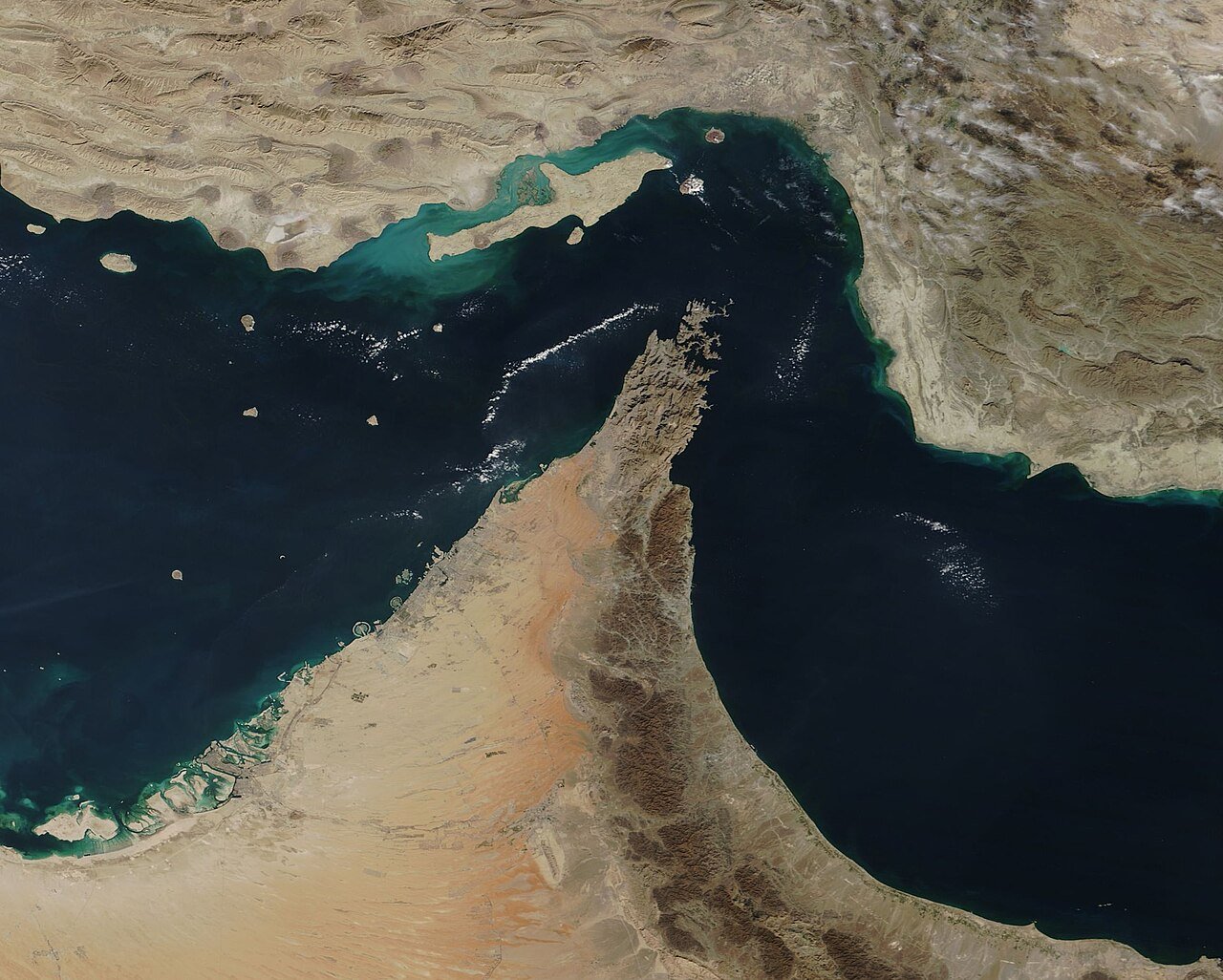
The severe disruption to transit through the Strait of Hormuz — through which approximately 20% of global oil trade passes — produced documented and immediate consequences. Global oil and gas prices surged. Financial markets experienced reported volatility. Aviation was disrupted across a wide corridor. Reporting indicated that Iranian forces announced measures targeting the Strait and that shipping through it slowed significantly; whether a formal, complete closure was enforced is not consistently confirmed across reliable sources, and this article treats the status as serious and documented disruption rather than verified total closure. What is clear is that the combined effect of Iranian actions targeting the Strait, alongside strikes by both sides on energy infrastructure, produced rapid real-world consequences for global energy markets. Those consequences were not borne symmetrically by the parties who made the decisions that produced them.
The longer-term strategic consequences are necessarily analytical rather than established fact at this stage, but they are grounded in structural logic. The reported killing of a sitting supreme leader during active diplomatic negotiations between that state and the United States — if confirmed — establishes a precedent. States evaluating the strategic value of entering negotiations with Washington — including North Korea, whose calculus involves similar questions about whether diplomatic engagement increases or decreases their physical vulnerability — now have a data point they did not have before. Whether this shifts those calculations is not knowable now; that it is a consequential data point is an analytical conclusion this article asserts transparently as interpretation.
The risk distribution in the event that stated assumptions fail is asymmetric, and this is not an interpretive claim — it follows from the structural facts. If the imminent-threat framing proves unfounded, as publicly available reporting on US intelligence assessments at minimum raises as a question, the costs of that error will be borne by Iranian civilians, by populations in Gulf states struck by retaliatory fire, by US service members killed and wounded, and by global populations absorbing energy price shocks. The officials who authorized the decision face no comparable material exposure. That asymmetry is documented in the structure of the decision — not imposed by this article’s framing.
Investigation — Verification Gaps, Accountability Failures, and Unanswered Questions
The core accountability question of this war is not whether Iran was a regional adversary with a complex and partially opaque nuclear program — that is established in the public record. The question is whether the specific, imminent threat invoked to justify military action was accurately characterized and sufficient to override active diplomacy, and whether the institutions and processes designed to govern decisions of this magnitude functioned as intended.
The negotiation timeline is the most verifiable pressure point, and it has not been adequately examined publicly. Multiple credible outlets reported that Oman — a state with no documented interest in mischaracterizing the talks — publicly described a diplomatic breakthrough on 27 February. The strikes began the following morning. The US envoy’s subsequent account of those same negotiations conflicts with accounts attributed by other reporting to diplomats present. These two accounts cannot both be accurate. No independent investigation, congressional inquiry, or impartial diplomatic review has publicly examined what occurred in those negotiations or why the US proceeded militarily within hours of a mediating state’s positive characterization. This article treats that gap as an analytical indicator of institutional accountability failure — a conclusion derived from the documented sequence of events, not from independent verification of internal deliberations.
The intelligence basis for the imminent-threat claim has similarly not been subjected to independent review. Reporting on assessments from the Defense Intelligence Agency and broader US intelligence community, as noted in the source material, did not support the characterization of an imminent Iranian attack. The State of the Union Address framing — Iran developing missiles capable of striking the US — was not supported by the IAEA’s language, as reported. The process by which intelligence is translated into presidential authorization — what was presented, what was emphasized, what was omitted — is precisely the terrain that oversight institutions exist to examine. Here, that terrain remains unexamined publicly.
The role of foreign governments in shaping the decision is a distinct accountability question. If Saudi Arabia lobbied the president repeatedly to take military action, as reported by the Washington Post and denied by Riyadh, the American public was not informed of this. If Netanyahu’s intelligence about Khamenei’s location was operationally necessary for the targeting, questions about the command relationship between the two governments — and about whose strategic objectives were being served — are legitimate and have not been answered. These are not rhetorical points. They are questions about whether the United States government made a decision to go to war on the basis of its own assessed national interest, or as an instrument of allied agendas that it chose not to disclose publicly.
What Is Known, What Is Uncertain
Confirmed Facts:
- The United States and Israel launched coordinated strikes on Iran beginning 28 February 2026, under “Operation Epic Fury” (US) and “Operation Roaring Lion” (Israel), as confirmed by official statements and consistent multi-outlet reporting
- Multiple credible outlets reported that the strikes killed Supreme Leader Ali Khamenei and senior Iranian officials; independent confirmation remains constrained by ongoing conflict conditions
- Active nuclear negotiations were underway at the time of the strikes; Oman’s foreign minister publicly characterized the diplomatic process positively the day before they began, as reported across multiple outlets
- Reporting on IAEA public statements indicated the agency had found no evidence of a structured Iranian nuclear weapons program; the agency also noted it had been denied access to certain facilities and could not certify the program was “exclusively peaceful” — characterizations that reflect reported interpretations of agency findings, not direct institutional quotations
- Iran conducted retaliatory missile and drone strikes against Israel and US bases and allied states across the Gulf region, as confirmed by official statements and consistent reporting
- Significant disruption to transit through the Strait of Hormuz occurred, producing documented global energy market consequences; the extent of any formal closure is not consistently confirmed across reliable sources
- The US did not obtain congressional authorization before initiating hostilities, as established by the absence of any reported congressional vote
- Reporting across multiple outlets indicated Secretary of State Rubio stated publicly that preempting Iranian retaliation against an anticipated Israeli attack was one reason for the US strikes; Trump publicly disputed this account
- Trump stated in his initial address, as reported across multiple outlets, that regime change was an objective
Contested Claims:
- Whether Iran posed an imminent military threat at the time of the strikes (disputed within US defense and intelligence reporting; asserted publicly by Trump and other administration officials)
- The precise terms of any Iranian diplomatic concession made on or before 27 February (reported but not confirmed through primary transcript; disputed by Witkoff’s account)
- Whether the IRGC defied direct presidential orders to cease operations (reported across multiple outlets including Reuters; not independently confirmed as an established institutional fact)
- Whether Saudi Arabia lobbied Trump to attack Iran (reported by the Washington Post; denied by Saudi Arabia)
- Whether Witkoff accurately characterized the state of nuclear negotiations (disputed by reporting attributed to diplomats present; neither account independently confirmed through primary documentation)
- The precise civilian and military casualty toll in Iran (figures diverge significantly across Iranian government, HRANA, Hengaw, and US/Israeli sources; none independently verified)
- Whether Qatar participated in strikes against Iran (reported by Channel 12 and attributed to Western diplomats by other outlets; vigorously denied by Qatar’s foreign ministry)
Unknowns or Missing Data:
- The full intelligence basis presented to Trump before he authorized the strikes, and what was omitted or contested within the assessment process
- The content of Netanyahu’s 23 February communication to Trump, and what targeting intelligence was shared through what legal and command framework
- What occurred in the Geneva negotiations that led the US to proceed militarily within hours of Oman’s reported breakthrough declaration
- The legal authority formally invoked for the use of force, and whether any executive branch legal opinion was prepared and reviewed
- The full scope of damage to civilian infrastructure — hospitals, schools, cultural sites — which has not been independently verified
- The institutional capacity and decision-making authority of the new Iranian leadership under Mojtaba Khamenei, and the degree of command coherence within the IRGC going forward
- Whether any independent governmental, congressional, or international legal inquiry into the decision-making process has been initiated
Continued scrutiny of this conflict is warranted because the justifications offered for initiating it remain unverified, internally inconsistent, and in several cases in reported conflict with the assessments of the agencies and institutions whose authority they invoked.