
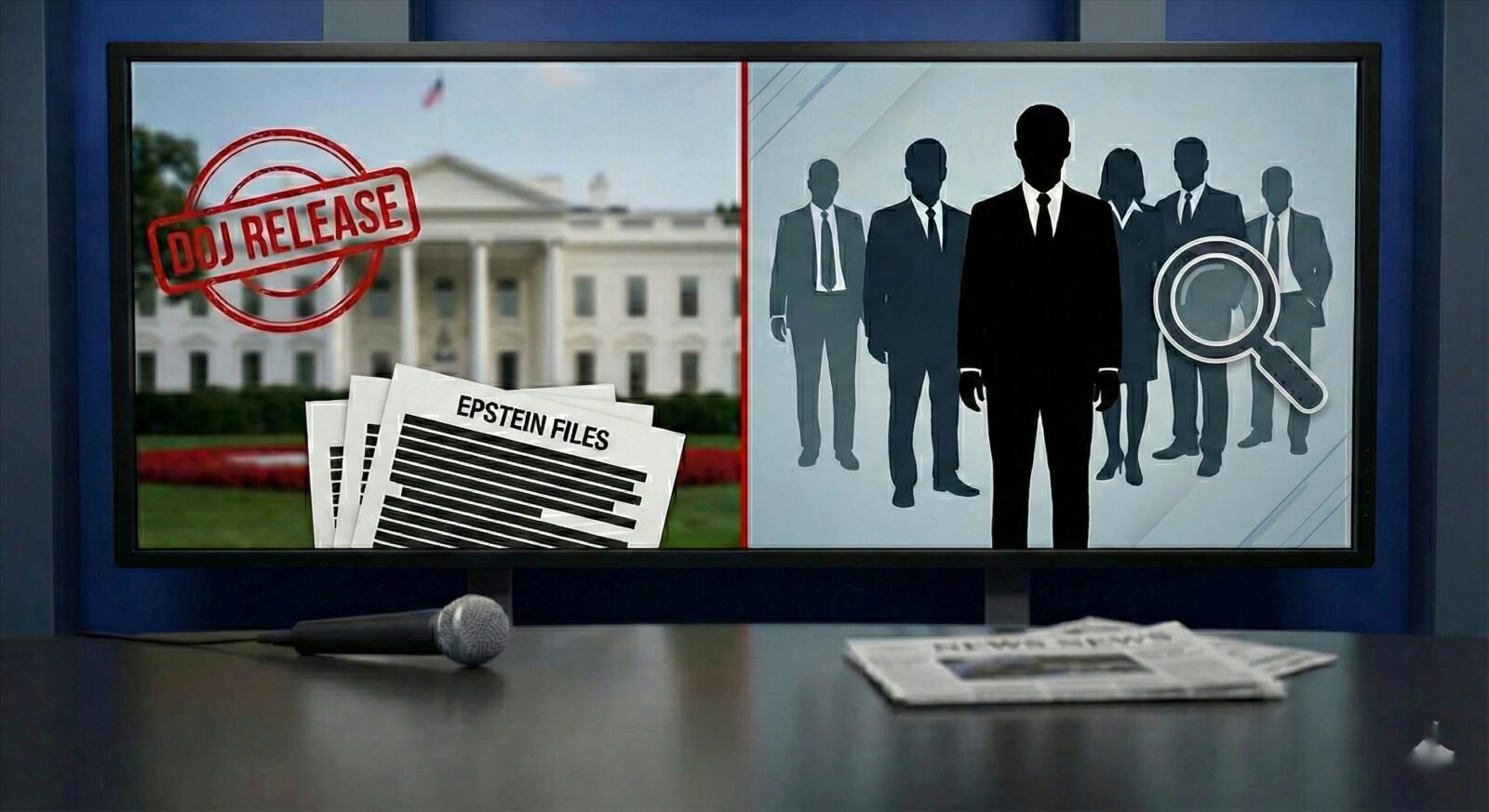

A Justice Department release of over 3 million pages of Epstein-related documents has prompted renewed examination of associations between high-level Trump administration figures and the late financier Jeffrey Epstein, whose criminal activities involved sex trafficking of minors. The NBC News review highlights varying degrees of connection but does not allege wrongdoing by the officials named.
Following the Justice Department’s release of millions of pages of records related to Jeffrey Epstein in early 2026, NBC News conducted a review that identified connections — ranging from isolated emails to more extended communications — involving at least half a dozen top officials serving in the current Trump administration. The reporting emphasizes that the extent and nature of these associations differ significantly across individuals, and no accusations of criminal conduct tied to Epstein’s offenses have been made against these officials in the documents or by authorities.
References Used
Primary Sources:
- U.S. Department of Justice Epstein files releases (various batches, including emails, flight logs, and interview summaries made public in 2025–2026).
- Specific documents referenced in reporting (e.g., email exchanges, investment records, and visitation mentions cited in DOJ datasets).
Secondary Reporting & Analysis:
- NBC News article: “At least half a dozen top Trump administration officials appear in the Jeffrey Epstein files” (February 2026, by multiple reporters including Dareh Gregorian, David Ingram, Rebecca Kaplan).
- Related NBC News coverage on individual figures (e.g., Commerce Secretary Howard Lutnick’s island visit acknowledgment, Steve Bannon’s recorded interviews with Epstein).
- Contextual pieces on prior Epstein-Trump social ties and administration handling of file releases.
Method Notes:
Verification is constrained to publicly released DOJ documents and journalistic reviews of those records. The full 3+ million pages have not been exhaustively indexed or independently audited by external parties in real time; redactions remain in portions of the files. No non-public intelligence or sealed court materials are cited.
Context and Factual Grounding
Jeffrey Epstein, a financier convicted in 2008 of procuring a minor for prostitution, faced renewed federal charges in 2019 for sex trafficking before his death in custody that year. His network included prominent figures in finance, politics, science, and entertainment, documented through court cases, flight logs, address books, and communications.
The Justice Department, under the current Trump administration, has progressively released Epstein-related records following congressional pressure and legislation signed by President Trump in late 2025 compelling disclosure. These releases — totaling over 3 million pages across batches — include emails, memos, interview summaries, and other materials gathered during prior investigations.
President Trump himself appears thousands of times in the files, reflecting a documented social relationship with Epstein in the 1990s and early 2000s in New York and Palm Beach circles. Trump has publicly stated he ended contact in the mid-2000s, describing Epstein as a “creep,” and has never been accused by authorities of wrongdoing in connection with Epstein’s crimes.
The recent NBC News analysis focuses on sitting administration officials whose names surfaced in the documents. Connections range from minimal (e.g., a single forwarded email) to more sustained (e.g., multi-year email threads or documented visits). The reporting stresses variation and avoids equating all contacts with complicity in Epstein’s criminal conduct.
This disclosure occurs amid broader political scrutiny of Epstein’s associations across party lines, including figures linked to former administrations. Public and congressional interest intensified after earlier partial releases and calls for transparency.
The files do not contain previously unreleased “client lists” or definitive evidence of new criminal acts by named individuals beyond what was already litigated or reported.
Claims, Signals, and Interpretations
The central claim — at least half a dozen current top officials appear in the Epstein files — originates from NBC News’ own review rather than a direct DOJ assertion. The outlet frames the finding as factual based on document examination but qualifies it heavily: connections “vary significantly,” and no implication of wrongdoing is made.
Timing of the reporting aligns with ongoing DOJ releases in early 2026, which themselves followed Trump-signed legislation and bipartisan congressional demands. Critics of the administration have used the material to question vetting processes for appointees, while supporters argue the files reveal long-past associations common in elite networks without relevance to current service.
Specific examples highlighted include Commerce Secretary Howard Lutnick, whose emails show post-2005 communications with Epstein (contrary to his prior public claim of cutting contact in 2005), including a 2012 family visit to Epstein’s island for lunch. Lutnick has denied any untoward interaction and faced congressional questioning but retains White House support.
Former officials or allies like Elon Musk (ex-DOGE chief) and Steve Bannon (ex-chief strategist) also appear, with Bannon’s ties including recorded interviews intended to help Epstein rehabilitate his image after 2018. These cases illustrate how Epstein cultivated relationships for influence or social capital.
The phrase “connections” functions as broad and neutral — encompassing everything from casual emails to repeated contact — which allows wide interpretation. Media amplification often emphasizes the number (“half a dozen”) while the original reporting dilutes certainty by noting variability and absence of criminal allegations.
Incentives for scrutiny include partisan efforts to highlight administration vulnerabilities, survivor advocacy for full transparency, and internal White House dynamics around appointee loyalty.
Power Structures and Constraints
Epstein operated within overlapping elite networks of finance, politics, and philanthropy, where personal associations often served mutual reputational or business interests. Government vetting for high office focuses on financial disclosures, loyalty, and criminal records rather than exhaustive social-history mapping.
The DOJ’s release process is institutionally constrained: redactions protect privacy or ongoing matters, and volume limits rapid public comprehension. Congressional oversight exists but is partisan-divided, with access to unredacted versions limited to select lawmakers.
Administration capacity to respond is shaped by political priorities — defending appointees while managing optics — rather than investigative depth into historical ties. Publics are not monolithic: reactions split along partisan lines, with some viewing revelations as disqualifying and others as smears or irrelevant.
Material constraints include incomplete digitization of older records and reliance on what Epstein retained or what investigators seized. No central “master list” exists; associations emerge piecemeal.
Institutional power asymmetries favor those with resources to weather scrutiny (legal teams, media access) over survivors or smaller voices seeking accountability.
Consequences and Secondary Effects
Short-term effects include congressional hearings (e.g., Lutnick’s Senate appearance), calls for resignations from some lawmakers, and White House reaffirmations of support. Media coverage sustains attention, potentially affecting public approval metrics already showing disapproval of the administration’s Epstein-file handling.
Longer-term, repeated associations could erode trust in appointment processes if perceived as lax on historical red flags, even absent criminality. For individuals, reputational damage may linger regardless of context, influencing future political viability or business dealings.
Risks fall unevenly: officials face political pressure but retain institutional backing; Epstein victims and advocates bear ongoing frustration if releases fail to yield new justice mechanisms. Broader society risks desensitization to elite-network overlaps if “connection” becomes normalized without differentiation.
Secondary effects include polarized discourse — accusations of cover-ups versus claims of partisan weaponization — that further erode institutional credibility around transparency efforts.
What Is Known, What Is Uncertain
Confirmed Facts:
- The Justice Department released over 3 million pages of Epstein-related documents in batches during 2025–2026.
- NBC News review identified connections to at least half a dozen current Trump administration officials in those files.
- Degree of connection varies (single emails to extended communications).
- No official accusations of wrongdoing related to Epstein’s crimes appear against these individuals in the released documents.
- Specific cases include Commerce Secretary Howard Lutnick’s acknowledged 2012 island visit and communications post-2005.
Contested Claims:
- Interpretations of what any “connection” signifies (e.g., social proximity vs. awareness of crimes), attributed variably to critics, defenders, and reporters.
- Prior public statements by some officials (e.g., Lutnick on contact cutoff date) versus document evidence.
Unknowns or Missing Data:
- Full identities and exact number beyond “at least half a dozen” (NBC did not publicly list all).
- Complete unredacted context for many mentions.
- Whether additional unreleased materials would alter understandings.
Continued scrutiny of the Epstein files remains necessary to assess the completeness of public disclosures and the implications for institutional accountability.